
Borage Tea 101: Origin, Health Benefits, and Recipes [2025]

Borage tea is an ancient soothing drink made from the borage flowers or, sometimes, leaves. This plant with bright blue star-shaped flowers was originally cultivated in the Mediterranean region and used in traditional medicine to strengthen the nerves, reduce stress, and relieve cold symptoms. This tea has both a mild taste and numerous health benefits.
In this article, we will learn about borage’s origin, its health benefits, and how to brew a cup of borage tea or decoction.
Where Does Borage Come From?
The borage plant is a member of the Boraginaceae family, whose scientific name is Borago Officinalis. Borage’s origin is in the Mediterranean regions, and its lifecycle is usually one or two years. The stems are covered with soft hairs, and its leaves have a mild cucumber-like flavor, and its flowers are star-shaped and blue.
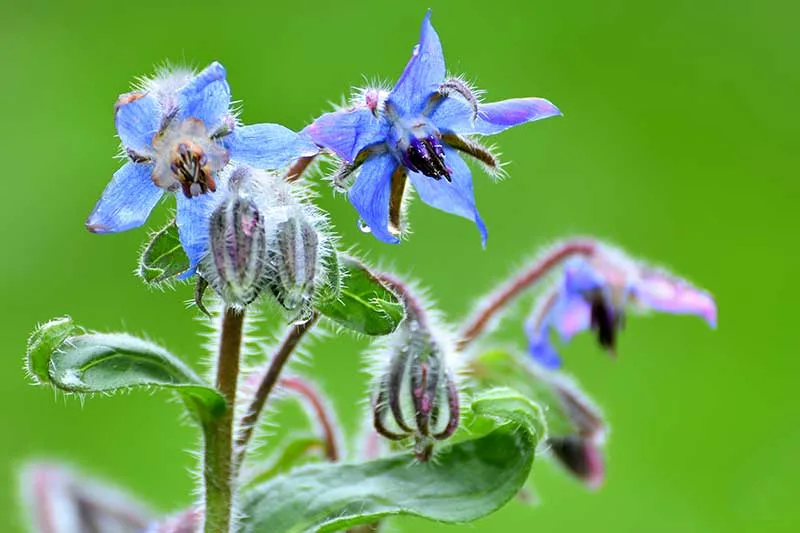
Its use in traditional medicine is extensive. Borage’s leaves and flowers are used for brewing herbal tea, and the seeds are used to extract oil for various purposes, like aromatherapy. Borage is famous in ancient Greece and Rome, as well as in ancient Persian medicine.
What are The Health Benefits of Borage?
Borage tea has active ingredients such as flavonoids, tannins, mucilage, and gamma-linolenic acid (GLA). Let’s explore the health benefits borage tea has as a result of these active ingredients.
#1 Reduces Inflammation
The fatty acid GLA found in borage seeds is one of the main anti-inflammatory agents of the plant. Preliminary studies show that borage reduces inflammatory markers.
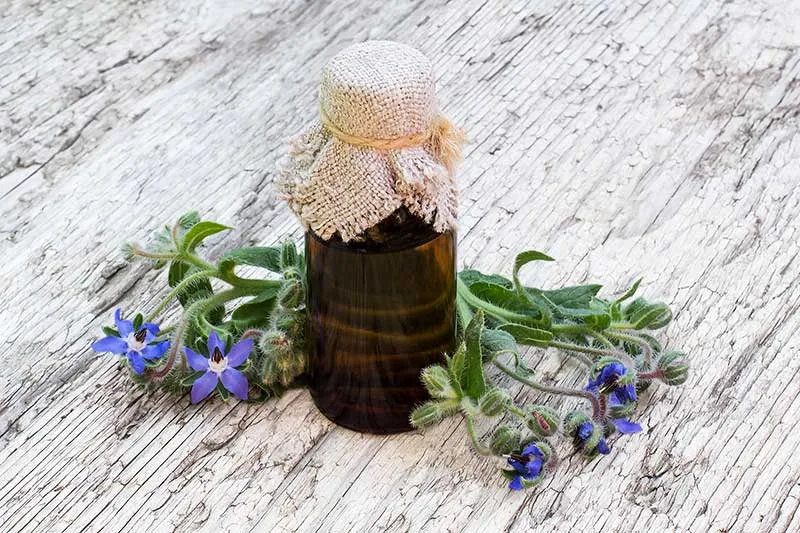
However, it should be noted that most of the studies are on the seed oil, not on the leaf or flower tea, but still, the plant itself carries the same benefits as its seed oil.
#2 Respiratory Health
In traditional medicine, borage tea is used to relieve colds, bronchitis, and respiratory problems. This effect is due to the presence of mucilage compounds and the plant’s anti-inflammatory effects.
#3 Skin Health
Due to its antioxidant and anti-inflammatory effects, borage also contributes to skin health. For example, it is effective in treating acne & eczema or reducing inflammatory skin symptoms.
#4 Cardiovascular and Metabolic Health
Many studies show that borage is effective in reducing triglycerides, increasing HDL or good cholesterol, and lowering blood pressure.
How to Brew Borage Tea?
Borage tea is prepared in three common ways:
- Classic borage tea
- Borage herbal blend infusion
- Borage decoction.
Classic Borage Tea
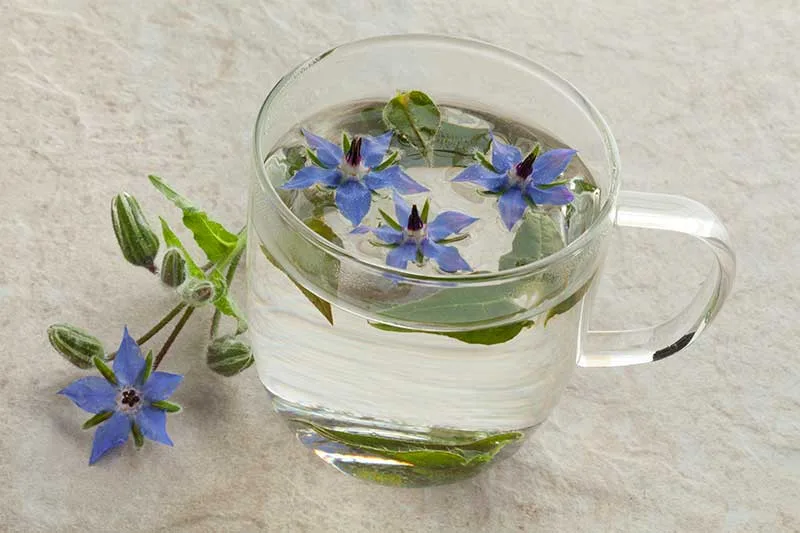
- Pour about 1 to 2 teaspoons of dried borage flowers or leaves into a teapot or cup.
- Bring the water to a boil, then let the water cool down slightly and pour it over the plant to maintain its mild flavor.
- Cover the teapot or cup and let it steep for 10–15 minutes.
- Then strain and drink.
Borage Herbal Blend Infusion
If you want to add more flavor or benefits to your tea, combine borage with herbs such as peppermint, citronella, lemon balm, or valerian. To brew a borage herbal blend infusion, follow the simple recipe below:
- Pack an infuser with 1 teaspoon borage and 1/2 teaspoon dried peppermint, citronella, or valerian.
- Place the infuse in a cup and add boiling water.
- Add a few drops of lemon for a fantastic taste.
- steep for 10–15 minutes.
- Strain, and drink.
Borage Decoction
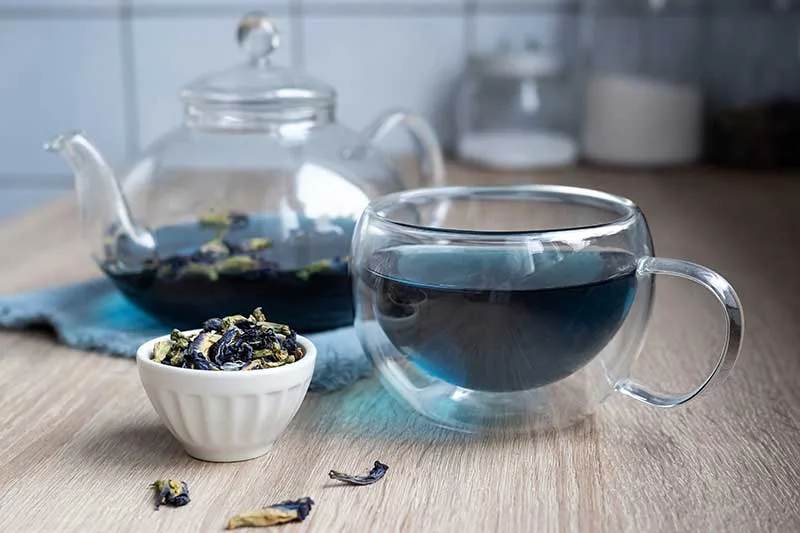
If your goal with your tea is to extract more of the active ingredients, brew a borage decoction:
- Pour about 1 tablespoon of borage flowers or leaves into about half a liter of cold water.
- Bring to a gentle boil over low heat, then reduce the heat and simmer gently for 20–30 minutes.
- Then strain and drink.
Remember that any decoction you brew is highly concentrated. Therefore, drink in moderation to avoid potential side effects.
Conclusion
Borage Tea combines a long-standing herbal tradition with emerging scientific evidence. This Mediterranean-origin herb has been used in traditional medicine for centuries to calm the nerves, relieve respiratory symptoms, and improve the skin.
Today, basic research suggests that it may have anti-inflammatory, antioxidant, and cardiovascular benefits. It easily incorporates into your daily drinking regimen with simple methods such as brewing or boiling. Also, by purchasing a loose product or tea bag from a reputable brand, consumer choice has become easier. But the important thing is not to treat this tea as a miracle cure; if you have an underlying condition, are taking medication, or are pregnant/breastfeeding, be sure to consult a doctor or specialist. If you are looking for a mild herbal drink with potential benefits, borage tea is an interesting and lovely option.
