
Ginger Tea & Decoction 101: Health Benefits & Best Recipes

Ginger tea and its various blends and decoctions are considered to be among the oldest herbal drinks, widely consumed in various Asian, Middle Eastern, and European cultures. Ginger is not a simple spice at all, and many years ago, it was part of traditional Indian and Chinese medicine, which used it for digestive problems, colds, nausea, and to strengthen the immune system.
Today, although many modern medicines are available, ginger, both as a herbal tea or base herb, is still very popular because it is a reliable, low-risk, and multi-purpose drink. Drinking this amazing tea has become a daily habit among many tea lovers. Some drink ginger tea for morning energy, some to reduce inflammation, and others for its spicy, warm flavor.
In this article, we will discuss the origin and scientific health benefits of ginger and introduce a few classic herbal drink recipes with ginger.
History & Origin of Ginger
Ginger is found in South and Southeast Asia, and its history of use dates back more than 3,000 years. In ancient China, this spicy root was prescribed as a natural remedy for stomach aches, coughs, and nausea. In India, it was also part of the Ayurvedic system of medicine. The Greeks and Romans also used it to strengthen the body and prevent seasonal diseases.

With the growth of the spice trade in the Middle Ages, ginger gradually entered Europe and became one of the most expensive spices there. So expensive, in fact, that it was mostly used to brew medicinal syrups and bake luxury sweets. However, today the plant is cultivated worldwide, with India, China, Nigeria, and Indonesia being considered its largest producers.
What Are the Health Benefits of Ginger Tea?
Interestingly, as science has advanced, many of the traditional uses of ginger have been confirmed, making ginger one of the most popular medicinal plants in the world with several health benefits. Let’s explore the most important ones.
#1 Gets Rid of Nausea
Many studies show that ginger significantly reduces nausea and vomiting. In a reputable scientific review of several different studies, it says that ginger in doses of 1 to 1.5 grams greatly reduces nausea, especially during pregnancy.
#2 Reduces Muscle Pain and Inflammation
Ginger contains active compounds such as gingerol, which have very strong anti-inflammatory effects. Many studies show that regular consumption of ginger reduces muscle pain caused by strenuous activity.
#3 Helps Digestion and Reduces Bloating
Ginger tea increases stomach and intestinal movement and helps improve digestion. It is also useful for relieving bloating and heaviness in the abdomen after heavy meals.
#4 Strengthens the Immune System
Ginger has antioxidant & antimicrobial properties and strengthens the body against seasonal germs. This property is especially felt in hot ginger tea, with honey and lemon.
Recipes for Three Types of Ginger Tea
Here are three recipes for three types of ginger tea so you can brew a cup of herbal tea for each season.
#1 Classic Ginger Tea Recipe
Here’s a list of what you need to brew a cup of classic ginger tea:
- 1 – 1.5 tablespoons of fresh ginger chopped into little cubes (or 1 tablespoon of dried or powdered ginger)
- 2 cups of water
- Honey and/or lemon for taste (optional)
To brew, add gingers to a teapot. Then bring 2 cups of water to a boil and add it to the teapot. Let it simmer for 10 minutes to fully extract the ginger juice. Then, strain and drink. You can add honey or lemon if you like a bin sweet & sour taste.
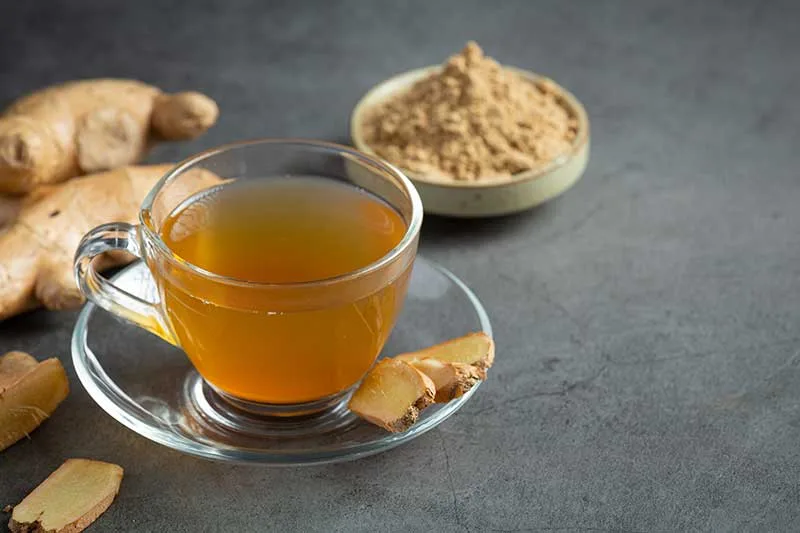
This is the simplest recipe, great for everyday ginger tea. It’s great all year round, especially during winter. Classic ginger tea is also the best choice for times like colds, sore throats, nausea, or fatigue.
#2 Ginger Decoction Recipe
This is a stronger and medicinal recipe, as all decoctions are, that has been very popular in Ayurvedic and traditional Chinese medicine. Here’s what you need to brew a delicious, healthy cup of ginger decoctions:
- 2 tablespoons of chopped fresh ginger or powdered ginger
- 3 cups of water
- Honey or other healthy sweeteners if you like
To brew, place the chopped ginger in three cups of water over medium heat. Boil for at least 20 to 30 minutes until the liquid thickens. Then strain the drink and add a little honey if desired.
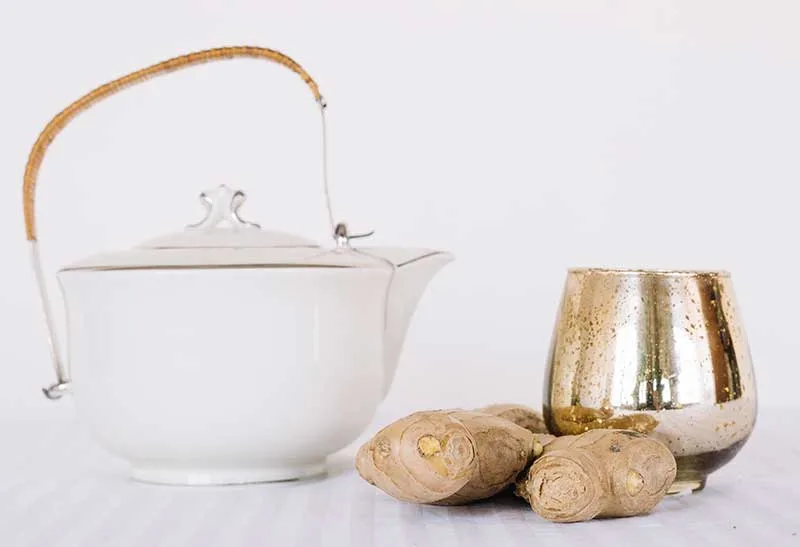
This drink is a great remedy for headaches, fatigue, and sore throats. But keep in mind that decoctions are very potent and you should drink them in moderation.
#3 Iced Ginger Tea Recipe
Cold brew ginger tea is a great summer herbal tea. It’s a hydration miracle and great for hot evenings or for those who like to drink ginger with a milder taste. Here’s a list of ingredients to brew iced ginger tea:
- 1 tablespoon of fresh ginger
- 2 glasses of water
- Ice cubes
- One half of a fresh lemon
- Honey or maple syrup if you like it sweeter
To brew, boil the ginger with water and leave on low heat for 10 minutes. After straining, let the drink cool completely. Then add ice and squeez the lemon. Here, you can also add a little sweetener if you like.
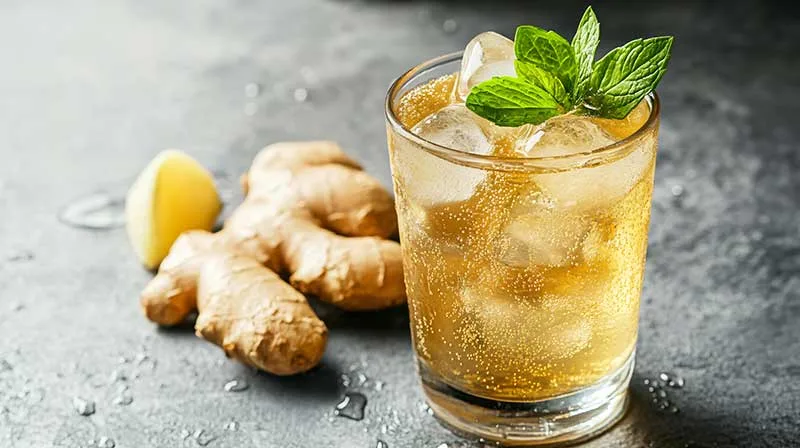
If you want a more flavorful version, throw a few fresh peppermint leaves or a cinnamon stick into the glass.
Conclusion
Ginger tea, whether consumed in its classic form, as a thick decoction, or as an iced beverage, is a complete and versatile herbal beverage. This ancient root, which has played a therapeutic role in the traditional medicine of various cultures for thousands of years, has gained a special place today with the support of scientific research. Its benefits, from reducing nausea to strengthening the immune system, have led many people to include it in their daily routine.
Fortunately, it is very easy to prepare and, depending on the situation, we choose a mild or strong version. If you have ever felt a heavy stomach, or had a day full of fatigue and inflammation, or even just looking for a healthy and fragrant drink, ginger tea is one of the best options. More importantly, personalize it with honey, lemon, cinnamon, or mint to make its taste and effects exactly according to your taste and needs.
