
Why Tea Tastes Bad on an Airplane & How to Make it Better

Drinking a cup of tea feels very good on a flight, but our experience may shatter as soon as we take the first sip. The tea tastes bitter, or it’s completely tasteless. It is strange that the same tea that you enjoy at home or even right before the flight has become so bad while you’re in the air. Everyone says the quality of the teabag used on the plane is to blame or the water used to brew the tea is contaminated. But there is another scientific reason behind it. The boiling point of water, the method of tea extraction, and even our sense of taste.
In this article, we will scientifically examine why tea tastes bad on a plane and how we can improve our tea drinking experience during a flight.
What Changes The Boiling Point of Water at High Altitude?
The most important reason why tea tastes bad on a plane is that the boiling point of water decreases at high altitude. At sea level, water boils at 100 degrees Celsius. But as you go up in altitude, the air pressure drops, and water boils at a lower temperature.
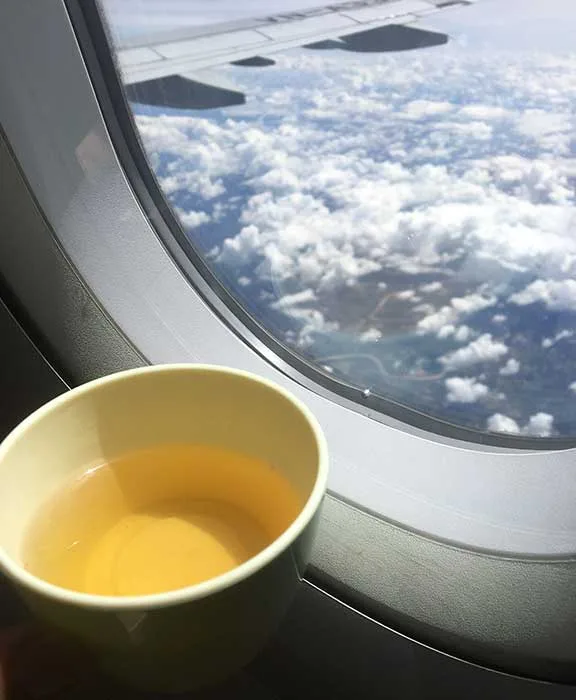
Airplanes fly at an altitude of 30,000 to 35,000 feet, but the cabin is pressurized, creating conditions similar to those at 6,000 to 8,000 feet above sea level. At this altitude, water boils at about 85 to 90 degrees Celsius instead of 100 degrees. This temperature difference is very important for tea, because many of the flavor compounds in tea are only properly extracted at high temperatures.
Why Does a Lower Temperature Make Tea Taste Bad?
To brew black tea in a proper way, water needs to be around 95 to 100 degrees Celsius. This temperature releases compounds such as polyphenols, tannins, and aromatic oils found in the tea leaves. When the water is not hot enough, these compounds are not extracted.
What happens is that the tea brewed on an airplane is weak, flat, bitter, unstable, or even gassy, without the depth and warmth of flavor we expect. On an airplane, not only does the water not reach the ideal temperature, but the steeping time with the tea is also short, as teabags are served quickly, and the flight crew should offer it to several passengers in a short time.
Air Pressure & Cabin Dryness Changes The Taste
The problem is not just water. The low air pressure and very low cabin humidity, which is about 10 to 20 percent, weaken our sense of smell and taste. More than 70 percent of our sense of taste depends on our sense of smell. When the nose and oral mucosa dry out, the brain perceives flavors as weaker and sometimes inconsistently.
That’s why not only tea, but also coffee, food, and even plain water taste different on an airplane. Tea, a delicate and aromatic beverage, suffers more than others.
Is Airplane Water to Blame?
To some extent, yes! The water used on planes is supplied from internal tanks and, although it is controlled for safety and hygiene, it has a neutral or stale taste. This water is not ideal for brewing tea, as the minerals in the water play a significant role in the final taste of the tea.
However, the major factors that impact the tea taste are still the temperature and pressure, not just the quality of the water.
How to Make Tea Taste Better on The Airplane?
If you love tea and don’t want to be disappointed on a flight, here are some tips that I personally follow whenever I have a long flight and want to enjoy my hot cup of tea.
Choose Green Tea or White Tea
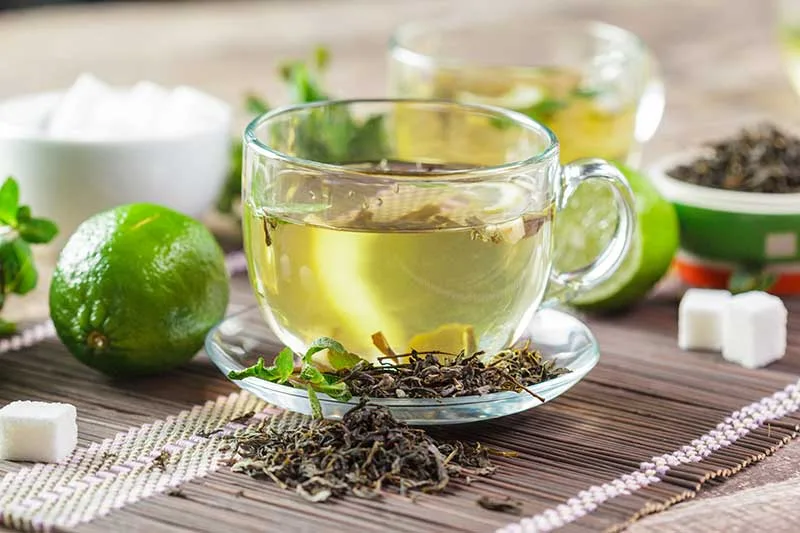
Many herbal teas, like green tea or white tea, require a lower temperature of 70 to 85 degrees for ideal brewing. Therefore, your tea will taste significantly better than other hot beverage alternatives during a flight.
Increase The Brewing Time
Let the teabag sit in the water for a few minutes longer to allow for more complete extraction. As long as you have a good quality teabag, your tea will taste much better on the plane.
Carry Your Own Teabags
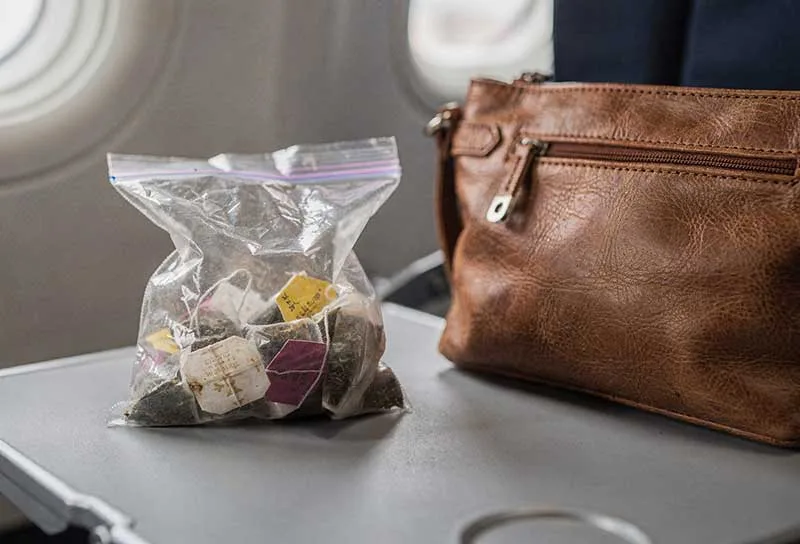
The quality of the tea leaves makes a big difference, even in the worst conditions. Regardless of traveling on an airplane or commuting by car, I always have a small plastic bag in my bag with 5 – 10 teabags of my favorite herbal teas. I can always find a cup of hot water, whether on a plain on the street.
Cold Brew Herbal Teas
Unlike me, who likes hot herbal tea more than cold brew herbal teas, many travelers carry ready-made cold brew tea. It’s the easiest and simplest way to enjoy a cup of tea, without needing hot water or waiting for a perfect brew.
Conclusion
Tea tasting poorly on a plane is not a coincidence or a matter of taste, but a direct result of physics and human physiology. The reduced air pressure lowers the boiling point of water, meaning the water never reaches the ideal temperature for brewing tea. On the other hand, the dryness of the cabin and the loss of olfactory acuity dull the delicate flavors of tea. Even with the best tea leaves, the flight conditions don’t allow the tea to reach the same quality as it would on land.
However, choosing the right type of tea, increasing the brewing time, and being a little more aware can make for a better experience. Knowing these tips will help you have more realistic expectations the next time you raise your cup of tea at 30,000 feet.
